 RoomTested
 Is Brave the best privacy browser? Yes for most people, with the settings pass it deserves
Is Brave the best privacy browser? Across independent studies, owner reports and reviews: strong engine level blocking, a trust record with a pattern, and who should pick LibreWolf instead.
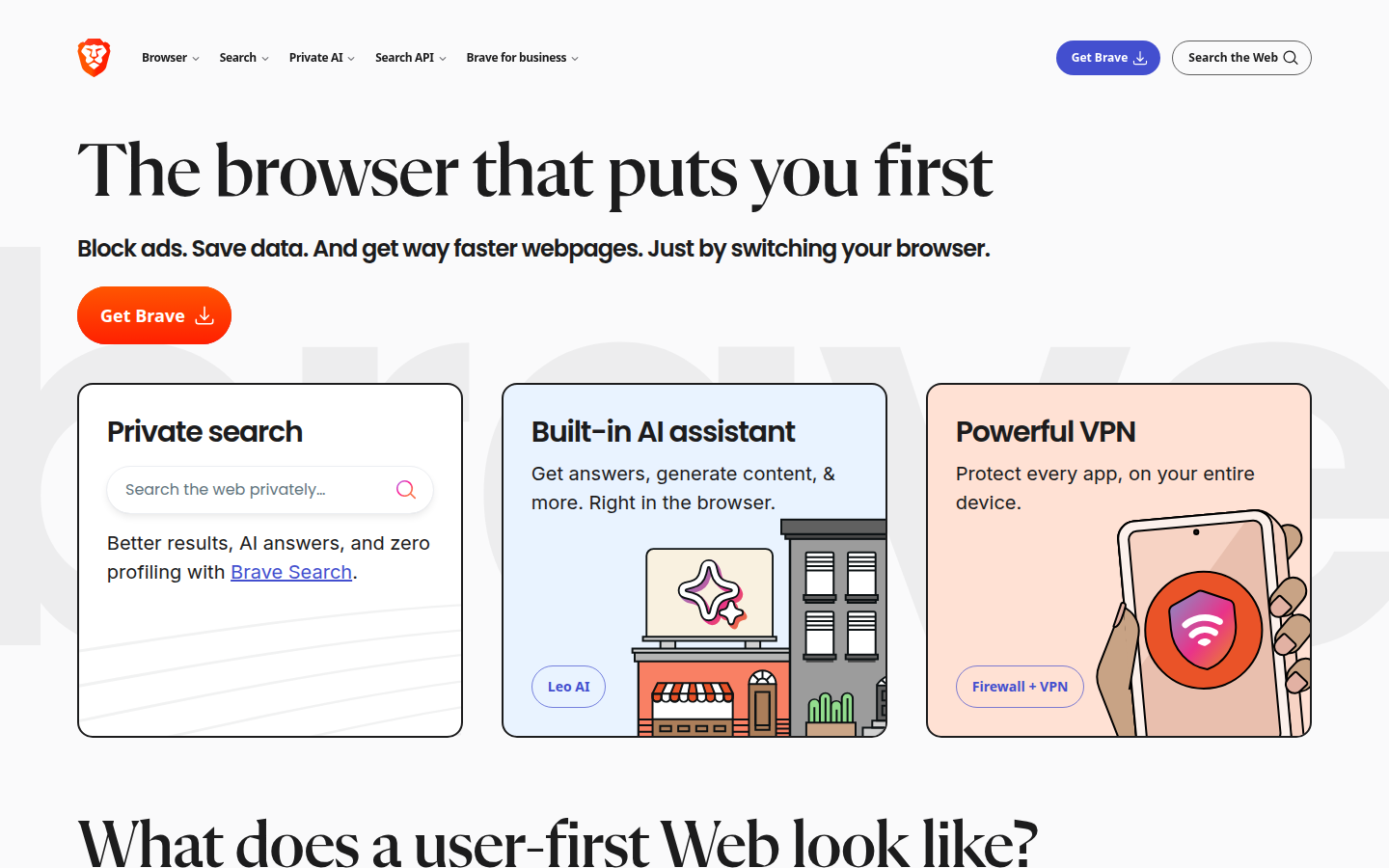
Yes, Brave is the privacy browser I’d point most people at, and you should spend five minutes in its settings before trusting it. That is the whole verdict, built from the spec sheet, independent studies, and a long trail of owner reports and reviews rather than our own bench. The protection is real and lives in the engine where Google cannot switch it off. The clutter around it, and the company’s habit of shipping revenue features you have to opt out of, is the part nobody puts on the landing page.
The context matters. Chrome killed the extension platform that uBlock Origin relied on, so the old answer, stock Chrome plus a good ad blocker, is dead. If you care about not being profiled while shopping for video doorbells without a subscription or anything else, the browser itself now has to do the blocking. That is the job Brave was built for.
What Brave actually does differently
Brave’s blocking is engine native, not an extension. Shields, the built in blocker, works from the same filter lists as uBlock Origin, detects trackers hiding behind CNAME cloaking, and swaps known tracking scripts for stripped down replacements so pages keep working . Third party cookies are blocked outright, and sites that demand third party storage get a temporary version that is wiped when you leave .
Fingerprinting gets the more interesting treatment. Instead of only blocking, Brave slightly randomises the browser features trackers read, so your fingerprint shifts rather than following you between sites, and the most identifying APIs are blocked outright .
 Read next What is local AI? The same keep it on your own kit logic, applied to AI assistants instead of browsers.
The Manifest V3 point deserves its own line, because it is the reason this guide exists. When Chrome removed the extension hooks that content blockers needed, Brave committed to keeping the old Manifest V2 versions of uBlock Origin, AdGuard, NoScript and uMatrix working, hosted and updated independently of the Chrome Web Store . Shields itself sits in the engine, so Google’s extension politics cannot reach it at all. On top of that you get automatic HTTPS upgrades, stripping of known tracking parameters from links, and a private window that routes over Tor.
Treat that Tor window as a convenience, not an identity shield. Routing through Tor is not the same thing as the hardened, uniform Tor Browser, and Brave’s version proved the point with a 2021 bug that leaked .onion lookups to normal DNS before it was patched . If your safety depends on anonymity, use the real Tor Browser.
The evidence, weighed honestly
The strongest independent evidence is old but rigorous. A Trinity College Dublin study instrumented six browsers to watch what they sent home and found Brave the only one whose default telemetry contained no identifiers that could track the user over time, ahead of Chrome, Firefox, Safari and Edge . Those were early 2020 builds, so treat it as evidence of design intent rather than a current benchmark.
The nearest recent corroboration is secondhand, and I will label it as such. A 2024 browser forensics paper summarises a separate evaluation of fourteen desktop browsers that sorted them into privacy tiers: Brave, LibreWolf and Tor at the top, with a specific note about Brave’s resistance to fingerprinting, and Chrome, Edge and Opera at the bottom . The original study sits behind a paywall we could not read, so treat this as pointing the same direction as Dublin, not as a second proof.
Two popular proof points deserve a health warning. The scorecard site privacytests.org shows Brave winning almost everything, and the tests are open source, but its author worked at Brave Software while running it, a caveat Wikipedia attaches to the site whenever it cites those results . Corroboration, not independent proof. And the “the EFF rates Brave strong” line you see repeated traces back to journalists running the EFF’s self test tool, in which Chrome and Safari also scored strong protection on the same day. Neither belongs in the headline.
The trust record, because it matters here
A privacy product is a promise, so the vendor’s record is part of the spec sheet. Brave’s has a pattern you should see before you commit.
In 2018 the browser showed tipping prompts for creators who had never signed up, collecting tokens on their behalf; Tom Scott called it passing off, and Brave shipped a fix that marks unverified creators and holds funds in the browser . In 2020, typing binance.com into the address bar autocompleted to a Brave affiliate link; the CEO called it a mistake and affiliate autocomplete was made opt-in from then on . In 2023 the Windows installer registered two Brave VPN services on machines whose owners had never bought the VPN; they sat dormant, and Brave committed to stripping the registrations from future installers once it was caught . The 2019 episode where Facebook and Twitter scripts were quietly whitelisted is the weakest of the four as an accusation, since cookie blocking still applied and the exception was about not breaking logins .
Read the pattern plainly: none of these were failures of the privacy engineering. Every one was a growth or revenue feature that shipped without asking first, got caught by outsiders, and was walked back quickly with a real fix. That cuts both ways. The responses were fast and none recurred, but four incidents in six years says the instinct is still in the building. Privacy Guides, the strictest mainstream referee, still recommends Brave in 2026, and in the same breath warns that its installer carries a referral code that pings Brave’s servers when you install .
What owners actually complain about
Across years of forum threads, the gripes are consistent and specific. Some sites break with Shields up, and the fix is dropping Shields for that site from the address bar icon. Sync is the sore one across owner threads: bookmark chains that quietly stop syncing and have to be torn down and rebuilt. Laptop and phone users report worse battery life than Chrome. And the loudest complaint is not about privacy at all: Brave ships with Rewards, a crypto wallet, a news feed, sponsored new tab images, an AI assistant and VPN promotions, all switched on. There is a community project whose entire purpose is stripping Brave back to a browser , and Brave now sells a paid edition of its own product with the monetisation removed .
The practical answer takes five minutes. Settings, then turn off Rewards, the wallet, Brave News and the sponsored background images, and hide the AI button if you will not use it. If you would rather run an assistant on your own hardware anyway, that is a different guide: pick a GPU for local AI and keep the queries at home. What remains after the settings pass is the fast, quiet browser the studies describe.
One more expectation to set: Brave Search is the default and it is fine for most queries, with owners keeping a search engine fallback for the long tail. The browser does not lock you to it, which is more than the smart home kit without lock-in crowd can say for most ecosystems.
Who should pick something else
Brave wins the pragmatic case, and it is not the maximal case. Across the privacy press and community guides, the field splits cleanly once you know what you are optimising for.
If you want the strongest anti fingerprinting without going near Tor itself, Mullvad Browser is the specialist pick: reviewers describe it as the Tor Browser without the Tor network, hardening included . If you want zero telemetry on principle and accept more broken sites plus manual updates, LibreWolf is the maximalist’s Firefox. A hardened Firefox with the arkenfox config sits between them, powerful and demanding. Tor Browser remains the anonymity tool, and a poor daily driver. And if your reaction to the Chromium engine is that you refuse to strengthen Google’s browser monoculture even indirectly, that is a coherent position, and it points you at the Firefox family rather than at Brave.
For the person leaving Chrome who wants their extensions to work, their banking site to render, and their ad blocking to survive Google’s roadmap, none of those alternatives beats Brave’s balance.
Switch to Brave if you are leaving Chrome and want engine level blocking, working fingerprint defence and uBlock Origin support that Google cannot revoke, and accept a five minute settings pass to strip the bundled extras. Skip it if you want zero telemetry and no monetisation instincts anywhere near your browser: take LibreWolf or Mullvad and live with the rough edges. Either way, the evidence says the days of stock Chrome plus an ad blocker are over.
Frequently asked
Is Brave actually private, or is it marketing?
The strongest independent evidence is a Trinity College Dublin study that found Brave's out of the box telemetry sent no identifiers that could track you, the only browser tested that managed it. A 2024 academic follow up put Brave in the top privacy tier alongside LibreWolf and Tor. The engineering is real; the marketing around it sometimes runs ahead of the evidence.
Do I have to touch the crypto stuff?
No. Brave Rewards, the BAT token and the wallet are optional, and the sensible move is to turn them off in settings on day one. The privacy protection does not depend on any of it.
Is Brave better than Firefox for privacy?
Out of the box, yes: Firefox needs manual hardening or the arkenfox config to match what Brave ships by default. A hardened Firefox or LibreWolf can go further than Brave, at the cost of more broken sites and more maintenance.
Isn't Brave just Chrome underneath?
It uses the Chromium engine, so sites behave the way Chrome users expect, but Brave strips out Google's sync, accounts and telemetry and documents the removals in open source. The engine is shared; the phoning home is not.
Get the honest stuff in your inbox
New reviews and price-checked UK deals on gear I’ve actually tested. About one email a week. No spam, unsubscribe anytime.
Related reviews & guides
 desk pc · guide
Jellyfin vs Plex in 2026: the price rises settled most of the argument
2 Jul 2026 desk pc · guide
Aquacomputer Quadro: the fan controller for a custom loop, and whether you actually need it
19 Jun 2026 networking · guide
Signal vs WhatsApp: same encryption, different owners, and the owner is the product
3 Jul 2026